Feeds RSS

lunes, 5 de octubre de 2009

Lucky Charms

Hi kids:
These are the 2 topics for Lucky Charms compositions:

a) Some of the things my family enjoys doing together are…
b)I can help protect the planet by …

List numbers from 1 to 12 will  write about the first topic ( Some of the things my family enjoys doing together are…). List numbers from 13 to 25 will write about the second topic ( I can help protect the planet by …).

The composition length will be  one  page, and I will recieve them in the classroom on wednesday October 7th.

Bye and good effort!


viernes, 25 de septiembre de 2009

Science Homework: What traits did you get from your family?

Hey kids:
I hope you liked the pictures I just uploaded about the surging of the monarch butterfly. Aren't they great? Of course, not as amazing as observing it live as we did, but pretty close, huh?

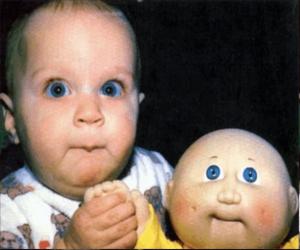
Ok, now, let's get to our business. We are studying in class how animals can get several of their traits (characteristics) from their parents or family members. Well, you're going to search back into your family albums and reaserch with your family members to do this homework. You'll make a research about the physical characteristics that you inherited from your parents, or any other family member.  You can even show pictures of you and your relatives to see how much you look alike! The homework will be done on 1/2 cardboard and it's for wednesday.

Have a nice weekend!

P.S. They DO look alike, don't they? ;P jaja.
See you!

Nature's Triumph!


Hi kids:
As promised, I'm uploading the pictures taken the moment we witnessed the monach butterfly coming out of its chrysalis. It was really a magical moment and we're very lucky to witness it. Thank you all, PUPA SQUAD members, who helped make this possible: once again, nature triumphed!


I also have the videos of this magical moment, but I'm trying to change the format in order for it to be able to be seen in the blog. I'll upload it as soon as I have it ready.

But now, here are the pictures we took of this magnificent miracle: the miracle of life.

Enjoy!


martes, 22 de septiembre de 2009

The Miracle of Life!

Hi kids:
Iam so amazed by the events we were so lucky to witness today! The surging of a butterfly out of its coccoon! It just make us realize how wonderful and dazzling nature is and that every life is a complete miracle.

Thanks to the PUPA SQUAD.  You helped this miracle be possible.

Remember that preserving nature is preserving us too!

See you!

martes, 15 de septiembre de 2009

PUPA SQUAD


Hi kids:
I'm very happy and  proud of your work helping nature keep its balance. The PUPA SQUAD is doing a great job! CONGRATULATIONS!!!
I really hope that more students join us, so if you want to help us on our quest to protect butterfly pupas at our school, you're more than welcomed. There's plenty of work to do!
Here I add some pictures from the work done by the PUPA SQUAD today. They tagged, counted and protected 53 pupas today!!! And we're going for more! They're also keeping a record of the date we spotted them, and their evolution in metamorphosis.
Again, congratulations, PUPA SQUAD!


domingo, 13 de septiembre de 2009

Learning about animals: Christmas Tree Worm

Hi kids!
As promised, here I give you information about this fantastic creature, commonly known as Christmas Tree Worm. I hope you find it as interesting as I do!

The Christmas tree worm, whose scientific name is Spirobranchus giganteous, is a small, and very elegant aquatic segmented worm ( segmented worms are those whose bodies are divided, or segmented, into different sections) . Its most distinct characteristic are the two "crowns" that are shaped as miniature Christmas tree. These "crowns " are actually used as mouths, each composed of feather-like tentacles which allow any prey  that is trapped in them to be transported  directly into the worm's mouth! Their diet consists basically on plankton.
Christmas tree worms are found in oceans, living on top of coral reefs. These animals posses extremely beautiful colors, that can go from red, orange, yellow, blue, green, and white to amazing  combinatios.

jueves, 10 de septiembre de 2009

How are animals alike and different?

Hi kids:

This is your new blog project. Just, this time, here you'll only find the instructions to do it because it must be brought  to class.

You have to select 3 different  animals and either paste their pictures on a cardboard or draw them on it. Next, you're to list the similarities each animal shares, as well as the differences.

This activity will be the first Science activity for portfolio. You will have to bring it to the class on Monday, September 14th.
See you!
Ms. Toni