Feeds RSS

martes, 13 de abril de 2010

Reading asignment: Female Power !!!

Hi kids:
We are studying the lives of great women that decided to take the future in their hands and follow their dreams, eventhough the path they chose was not an easy one.

Therefore, here I give you this task:

You will investigate the story of the first famous women  explorers. There are alot! Just search for "first women explorers" and choose one of them to write about. Explain what amazing thing they did and why you chose them.

Type  at least 2 paragraphs here. The asignment is to do here in the blog.

You have until Friday April 23, 7:00p.m.

Love.

(Amelia Earhart)
Ms. Toni P.

miércoles, 20 de enero de 2010

Camouflage Art


Hi kids:

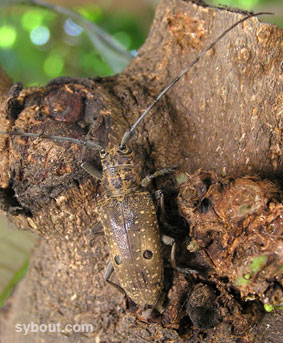
This is your new assignment for Science, now that we're studying adaptation in class, specifically camouflage.

You are to use half a cardboard and make a collage ( An artistic composition of materials and objects pasted over a surface) with animals that use camouflage either as defense or as attack. You can get images from magazines, stamps, internet, etc.

The most creative works will get 2 extra points in Science quiz 3.

You will have to bring  your work  to class next friday january 22.


Love.

Ms. Toni P.

P.S. Study hard for Language quiz!

martes, 19 de enero de 2010

Fantastic Creatures: All About Sloths!!!


Hi kids:
I'm so happy for the people that did the other blog homework ( the food chain game). I really hope you liked it, and most of all, learnt from it. I promise I'll get you more games like this.

Now, to our matter.

Remember we talked about the sloths? These great and amazing animals whose most konown trait is their slow motion? I loved the interest you showed on them and... well, here you'll find more information about them! Learn more about these animals and I know that you'll get to admire these creatures as much as I do.

Enjoy!
*********************************************

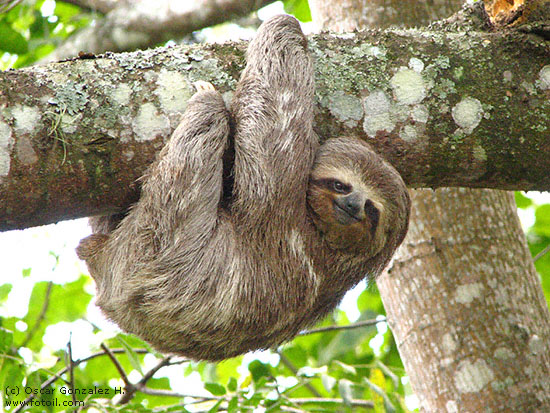
The sloth is a slow-moving mammal that lives in trees. Sloths spend most of their lives hanging upside-down from tree branches; they eat, sleep, mate, and give birth upside-down in the trees. They hold onto tree branches with strong, curved claws that are on each of their four feet.


Male sloths are solitary, shy animals. Females sometimes congregate together. Sloths are nocturnal; they are most active at night and sleep all day.

SLOTH ANATOMY


Sloths have a thick brown (and slightly-greenish) fur coat. Sloths are about the size of a cat (roughly 2 feet = 61 cm long). They have a short, flat head, big eyes, a short snout, a short or non-existent tail, long legs, and tiny ears. Sturdy, curved claws are on each foot; they use these claws to hang from trees.

Some sloths have colonies of green algae encrusting their fur, both adding to the camouflage effect and providing some nutrients to the sloths, who lick the algae.


NAME

The sloth got its name from its slow movement. It is not lazy, just slow-moving.


DIET

Sloths are plant-eaters who are more active at night; they eat leaves (including leaves from the cecropia tree), tender young shoots, and fruit; they are herbivores (plant-eaters). It used to be thought that sloths ate mostly cecropia leaves because they were often spotted in cecropia trees. It turns out that they also live in many other trees, but aren't spotted there as easily as in cecropia trees.


Sloths have a low metabolic rate and a low body temperature (91°F). This keeps their food and water needs to a minimum. Sloths have small molars which they use to chew up their leafy food. Their stomach has many separate compartments that are used to digest the tough cellulose (a component of plant material that they eat).


SLEEP

Sloths sleep during the day. They sleep about 15 to 18 hours each day, hanging upside down.


PREDATORS

Sloths are hunted by jaguars, harpy eagles, and people. A sloth's main forms of protection are its camouflage (greatly increased by the coating of algae growing on its fur) and its very slow movement; these adaptations make it virtually disappear in the rain forest canopy.


HABITAT AND RANGE

Sloths spend almost all of their lives in trees; they are arboreal. These mostly-quiet mammals live in the tropical rain forests of South and Central America.


LOCOMOTION

The sloth is the slowest mammal on Earth. Sloths are quadrupeds (four-legged animals) who "walk" upside-down along tree branches. They only rarely venture to the ground and walk on the ground in an upright position. Sloths can swim well.


LIFE SPAN

Sloths may live 10-20 years in the wild.


REPRODUCTION

Adult females produce a singe baby each year. They give birth upside down hanging from a tree branch.

viernes, 15 de enero de 2010

Food Chain: Let's Play!!

Hi kids:
The following is a link where you can put your knowledge about food chains to the test. This site contains an animated food chain game, where you'll have to match the different organisms in the proper order to form a food chain. You even get scores!

http://www.sheppardsoftware.com/content/animals/kidscorner/games/foodchaingame.htm

Your assignment is to enter the link and  PLAY THE GAME! You will then have to type your score here as a comment. I will be revising on monday after 7:00 pm, so you have plenty of  time to do this.

I hope you like the game and prove to bee real food chain masters!


See you!

miércoles, 9 de diciembre de 2009

Habitats


Hi kids:
Here is your Science assignment:

You will select a habitat from those we studied in class, and choose a plant and an animal that lives there. Draw them on a cardboard and write information about them that describes their physical traits, what do they need to survive, where are they found, etc.

The work is to be brought on friday December 10th and it'll be your first portfolio assignment for the 3rd period.

Have fun in your research!

Love:
Ms. Toni P.


lunes, 30 de noviembre de 2009

Komodo Dragon


Hi kids:
As promised, here's information regarding the great Komodo Dragon!

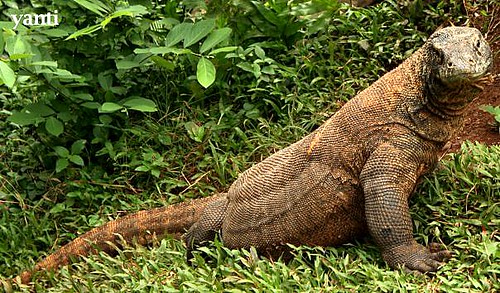
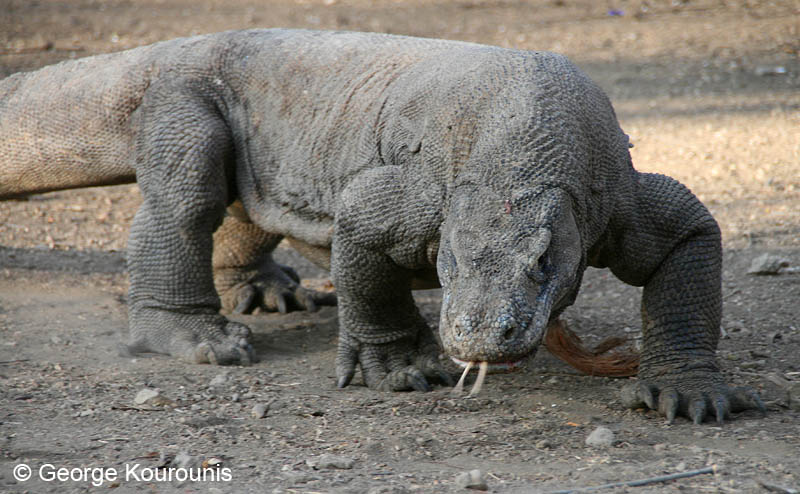
The Komodo dragon is a species of lizard that inhabits the islands of Komodo, Rinca, Flores, and Gili Motang in Indonesia. A member of the monitor lizard family , it is the largest living species of lizard, growing to an average length of 2 to 3 metres and weighing around 70 kilograms . Their unusual size is attributed to island gigantism, since there are no other carnivorous animals to fill the niche on the islands where they live; their large size is also explained by the Komodo dragon's low metabolic rate, that means, it takes long to fully digest and use all nutrients it gets, so it really  benefits from food.   As a result of their size, these lizards dominate the ecosystems in which they live. Although Komodo dragons eat mostly carrion, they will also hunt and ambush prey including invertebrates, birds, and mammals.

Despite their large size, Komodo dragons are fast short-distance runners. They can run as fast as 12 miles per hour for a brief period of time! However, Komodo dragons rarely chase after their prey. Instead, they are stealth predators - they hide and sit motionlessly for hours to wait for their food to come nearby. When Komodo dragons spot a prey, they ambush it by running out of their hideouts at top speed! Komodo dragons may use different attack strategies depending on the size of their prey. If Komodo dragons are ambushing a larger prey, such as a deer or a water buffalo, they attack its feet first in order to knock the prey off balance. If they are dealing with a smaller prey, such as a bird or a young Komodo dragon, they go for its neck first.
Sometimes their attack appears to be a failure, as their prey is able to get up and run away. Nevertheless, the wounded animal is not going to live long. Komodo dragons' saliva contains deadly bacteria. When Komodo dragons launch an attack and bite their prey with their flat, serrated teeth, they also pass along their saliva to the doomed animal. The escaped animal dies hours or days later from the infected wounds.


Lucky Charms December

Hi kids:
It's been a long since the last entry, but we've been working a lot on the Science Fair. By the way, GREAT JOB!!! You did excellent in your presentations. I'm really proud of you! 


Now, we have another assignment. This time, it's Lucky Charms!!  I need you to create a composition one page long. List numbers 1 to 12 will work on the following title:  New Year`s Resolutions: I promise to…


List numbers 13 to 24 will work on the following title: The real meaning of Christmas is…


You need to bring the composition written in your Composition notebook. I will receive them on Monday December 7th.


Study hard for your Period Exams!


Love.


Ms. Toni P.